
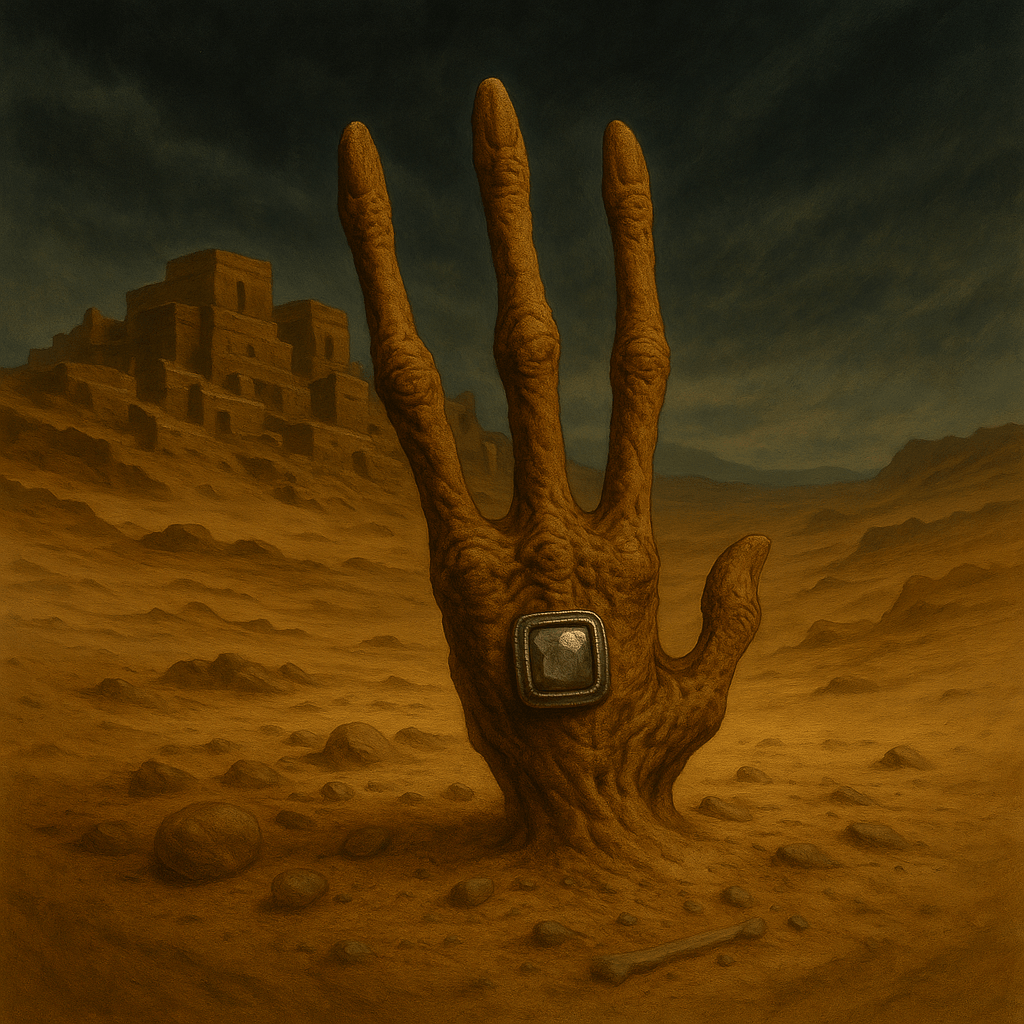
In the scorched deserts of Peru, among crumbling ruins and windswept sands, baffling discoveries continue to ignite imaginations around the world. Once again, the shadowy work of huaqueros—the secretive tomb raiders of South America—has unearthed artifacts that seem to defy explanation. At the center of this latest whirlwind are the so-called Nazca Tridactyls: small, uncanny mummies that have set the global paranormal community ablaze with speculation, hope, and fierce debate.
The Tridactyls, named for their three-fingered hands and feet, first made headlines years ago, but new developments have thrust them back into the spotlight. In a stunning revelation, forensic expert Dr. José Zalce Benítez, utilizing advanced imaging and investigative techniques, announced the discovery of an embedded metallic implant within one of the mysterious hands. This particular specimen—severed from any complete body—was not among those dramatically displayed before the Mexican Congress in 2023. Instead, it belongs to a scattered trove of relics tied to Peru’s growing legend of the alien mummies, many of which have been found preserved within a fine coating of diatomaceous earth, a natural substance known for its exceptional preservative qualities.
The implant, lodged within the palm of the three-fingered hand, was composed of a highly unusual alloy—aluminum, tin, silver, copper, and traces of other rare elements. According to Dr. Zalce, the composition and the placement raise questions that brush against the very edges of known science. Was this an ancient form of bio-augmentation? Evidence of medical technology from a forgotten civilization—or perhaps from beyond our world?
Yet not everyone is convinced.
Critics argue that the Nazca Tridactyls are clever fabrications—Frankenstein-like constructions stitched together from animal parts, paper mâché, and modern materials. Some point to inconsistencies in bone structure, while others highlight the almost theatrical quality of the mummies’ design. Skeptics demand rigorous, transparent genetic testing, not only to determine the biological origins of the remains but to silence—or validate—the storm of accusations and wishful thinking surrounding them.
Adding fuel to the fire, Dr. Ricardo Rangel, a prominent geneticist, has publicly stated that preliminary DNA studies suggest these beings may not be connected to any known species of Earthly life. Such a claim, if substantiated, would mark one of the most profound scientific revelations in human history. However, until peer-reviewed evidence emerges, the academic world remains wary—guarded against the seductive pull of sensationalism.
Meanwhile, among those who have studied the remains firsthand, a different perspective persists. For these researchers, the Tridactyls represent not an isolated anomaly, but a piece of a far larger and more complex puzzle—one that connects ancient Peruvian civilizations, global mythologies of “sky people,” and the lingering possibility that human history is far stranger and more expansive than we dare to imagine.
As the debate rages, we are left standing at a crossroads of possibility.
Are the Nazca Tridactyls elaborate fakes crafted to fool a credulous public—or are they a tangible reminder that we are not alone? Could ancient contact stories, whispered through the ages, have a literal basis we have yet to comprehend? Or are we witnessing a modern myth in the making, a reflection of our deepest desires to glimpse what lies beyond the boundaries of Earth?
In the search for truth, only time, transparency, and the careful work of scientists like Dr. Zalce and Dr. Rangel will decide the fate of these mysterious beings. Until then, the Nazca Tridactyls remain suspended between fact and fantasy, beckoning us deeper into the unknown unseen.
 Unknown Unseen