Author: Chris Sands

  • Calhoun Square: Savannah’s Haunted Heart

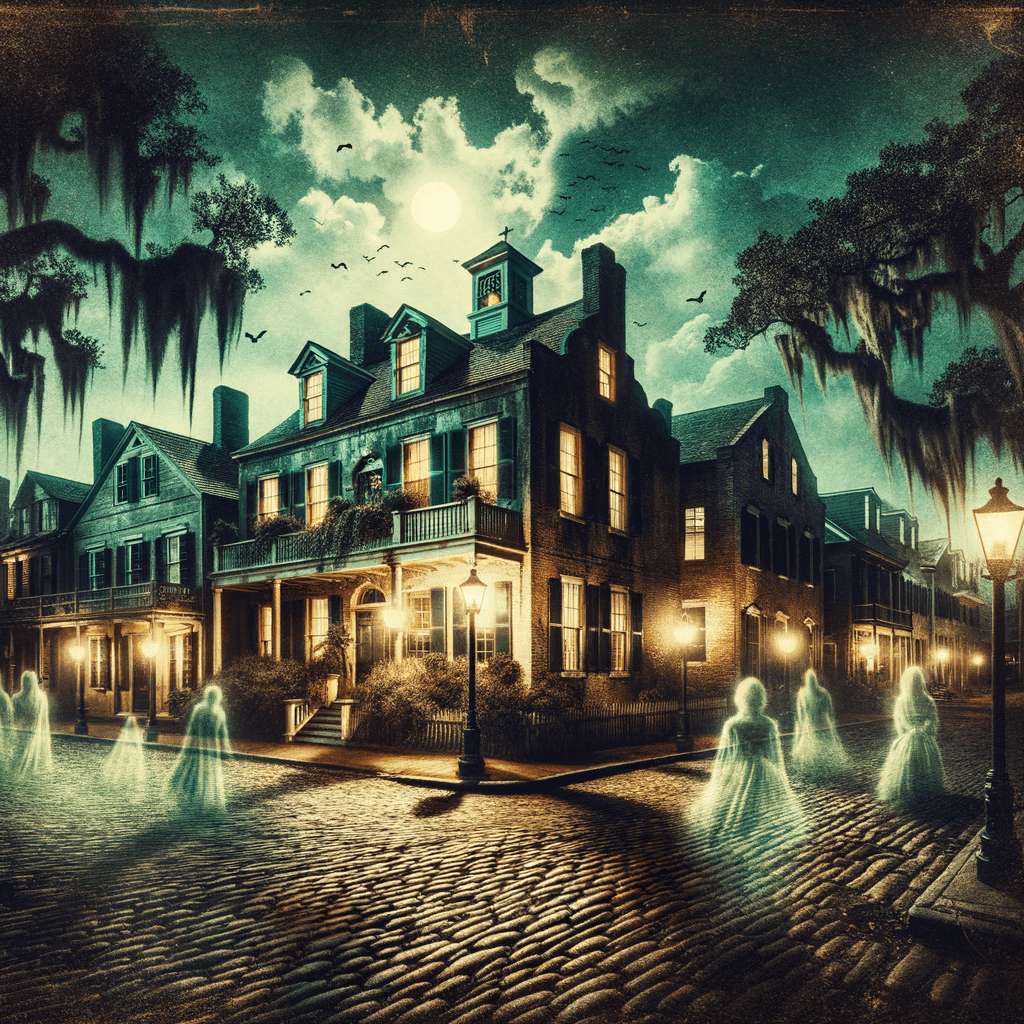
    In the shadowy depths of Savannah, Georgia, lies Calhoun Square—a place where time folds in on itself and history lingers not just in the stories passed down, but in the air itself. Among the city’s 22 iconic public squares, Calhoun bears the weight of a particularly troubled past. Unlike the manicured charm and polished façades of its sister squares, Calhoun is steeped in silence, its beauty masking a deeper unrest. Here, the past isn’t past. It walks with you.

    Flanking the square are two homes steeped in supernatural lore: the Espy House and the infamous 432 Abercorn Street. Each has its own tale, chilling in its own right, yet both seem bound to the same uneasy current that runs beneath the square’s ancient cobblestones.

    By day, Calhoun Square is an image of Southern grace. Spanish moss drapes from aged oaks. Tourists drift by, snapping photos of the Wesley Monumental United Methodist Church that looms with Victorian elegance over the square. But as dusk deepens into night, the square shifts. Locals report a sudden drop in temperature. Lamps flicker. Whispers curl through the trees. It is then that Calhoun Square begins to speak.

    What lies beneath the surface, quite literally, is the source of much speculation. In the early 2000s, a discovery was made that would cast a new light on Calhoun’s quiet corners. During utility work, unmarked graves were uncovered beneath the square’s soil. These were the final resting places of enslaved African people, interred without ceremony or record. It is believed that many of these graves date back to the 19th century, though their exact number remains unknown.

    This discovery collided with another grim detail: the building that once stood adjacent to the square was Savannah’s first public school for white children, which was later repurposed as a makeshift hospital during the Civil War. Imagine the layers of suffering: enslaved individuals buried in silence, wounded soldiers gasping their final breaths, and children taught atop the dead. The square is more than haunted; it is saturated with unresolved grief.

    These stories are not just historical footnotes—they seem to manifest. Witnesses recount shadowy figures drifting across the square at night. Some report hearing cries in a language they cannot identify. Others describe a sensation of being watched, even when the square appears empty. Paranormal investigators have registered anomalous EMF readings, inexplicable cold spots, and disembodied voices caught on recorders.

    And then, there are the houses.

    The Espy House, a dignified antebellum structure on the edge of the square, is home to a tale of forbidden love and brutal retribution. The legend centers around a young man named Wesley, said to be the son of the home’s original owner. Wesley fell in love with someone deemed inappropriate by his father—a servant or possibly someone of mixed race, depending on the retelling. When the relationship was discovered, the father is said to have reacted with violent fury. Wesley was either killed or driven to suicide, and his spirit never left. Visitors to the Espy House report strange thumps, flickering lights, and the occasional apparition of a young man staring forlornly from an upper window.

    A few blocks away sits one of Savannah’s most infamous addresses: 432 Abercorn Street. This home has been the subject of ghost tours, documentaries, and endless online speculation. The most persistent legend involves a young girl who lived there in the 19th century. After disobeying her strict father’s orders, she was allegedly confined to a sunless room as punishment. The story goes that she died there, malnourished and alone. To this day, some claim her face can be seen peering from the window. Others report lights turning on and off in an empty house, voices murmuring from behind locked doors, and the chilling sensation of a child’s presence brushing past in the dark.

    Skeptics dismiss these tales as urban legend, but the persistence of the accounts is hard to ignore. More intriguingly, some theorists suggest that the two houses—Espy and Abercorn—may be linked not just by location but by the spectral residue of trauma. Could these hauntings be expressions of the same deep wound? Could Wesley and the girl be bound not just by their tragic ends, but by the very earth that holds the forgotten dead?

    Calhoun Square, with its unmarked graves and eerie echoes, might well be the heart of that wound. It is a place that forces us to confront uncomfortable truths. The ghosts here are more than echoes; they are reminders. Of injustice. Of sorrow. Of the people history tried to forget.

    Today, visitors stroll through Calhoun Square, unaware of the layered tragedies beneath their feet. Children laugh near benches built over burial grounds. Brides pose for wedding photos in front of the Wesley church. But those who know, those who have heard the whispers or felt the cold brush of something unseen, walk with caution.

    For in Savannah, the veil between the past and present is always thin. And in Calhoun Square, it may be nearly gone.
  • The Nazca Tridactyls: Unpacking the Mystery of Peruvian Alien Mummies

    In the scorched deserts of Peru, among crumbling ruins and windswept sands, baffling discoveries continue to ignite imaginations around the world. Once again, the shadowy work of huaqueros—the secretive tomb raiders of South America—has unearthed artifacts that seem to defy explanation. At the center of this latest whirlwind are the so-called Nazca Tridactyls: small, uncanny mummies that have set the global paranormal community ablaze with speculation, hope, and fierce debate.

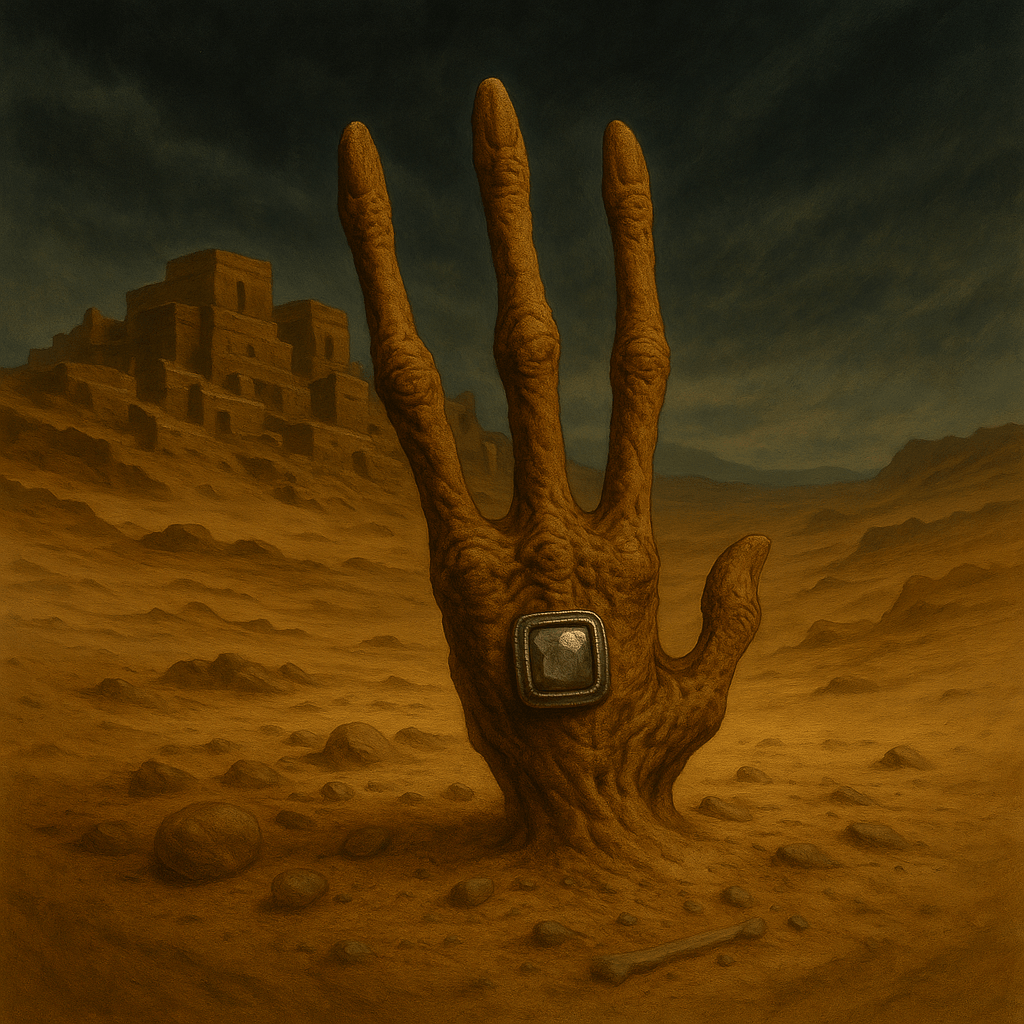
    The Tridactyls, named for their three-fingered hands and feet, first made headlines years ago, but new developments have thrust them back into the spotlight. In a stunning revelation, forensic expert Dr. José Zalce Benítez, utilizing advanced imaging and investigative techniques, announced the discovery of an embedded metallic implant within one of the mysterious hands. This particular specimen—severed from any complete body—was not among those dramatically displayed before the Mexican Congress in 2023. Instead, it belongs to a scattered trove of relics tied to Peru’s growing legend of the alien mummies, many of which have been found preserved within a fine coating of diatomaceous earth, a natural substance known for its exceptional preservative qualities.

    The implant, lodged within the palm of the three-fingered hand, was composed of a highly unusual alloy—aluminum, tin, silver, copper, and traces of other rare elements. According to Dr. Zalce, the composition and the placement raise questions that brush against the very edges of known science. Was this an ancient form of bio-augmentation? Evidence of medical technology from a forgotten civilization—or perhaps from beyond our world?

    Yet not everyone is convinced.

    Critics argue that the Nazca Tridactyls are clever fabrications—Frankenstein-like constructions stitched together from animal parts, paper mâché, and modern materials. Some point to inconsistencies in bone structure, while others highlight the almost theatrical quality of the mummies’ design. Skeptics demand rigorous, transparent genetic testing, not only to determine the biological origins of the remains but to silence—or validate—the storm of accusations and wishful thinking surrounding them.

    Adding fuel to the fire, Dr. Ricardo Rangel, a prominent geneticist, has publicly stated that preliminary DNA studies suggest these beings may not be connected to any known species of Earthly life. Such a claim, if substantiated, would mark one of the most profound scientific revelations in human history. However, until peer-reviewed evidence emerges, the academic world remains wary—guarded against the seductive pull of sensationalism.

    Meanwhile, among those who have studied the remains firsthand, a different perspective persists. For these researchers, the Tridactyls represent not an isolated anomaly, but a piece of a far larger and more complex puzzle—one that connects ancient Peruvian civilizations, global mythologies of “sky people,” and the lingering possibility that human history is far stranger and more expansive than we dare to imagine.

    As the debate rages, we are left standing at a crossroads of possibility.

    Are the Nazca Tridactyls elaborate fakes crafted to fool a credulous public—or are they a tangible reminder that we are not alone? Could ancient contact stories, whispered through the ages, have a literal basis we have yet to comprehend? Or are we witnessing a modern myth in the making, a reflection of our deepest desires to glimpse what lies beyond the boundaries of Earth?

    In the search for truth, only time, transparency, and the careful work of scientists like Dr. Zalce and Dr. Rangel will decide the fate of these mysterious beings. Until then, the Nazca Tridactyls remain suspended between fact and fantasy, beckoning us deeper into the unknown unseen.

  • The Mothman Mystery: West Virginia’s Winged Enigma

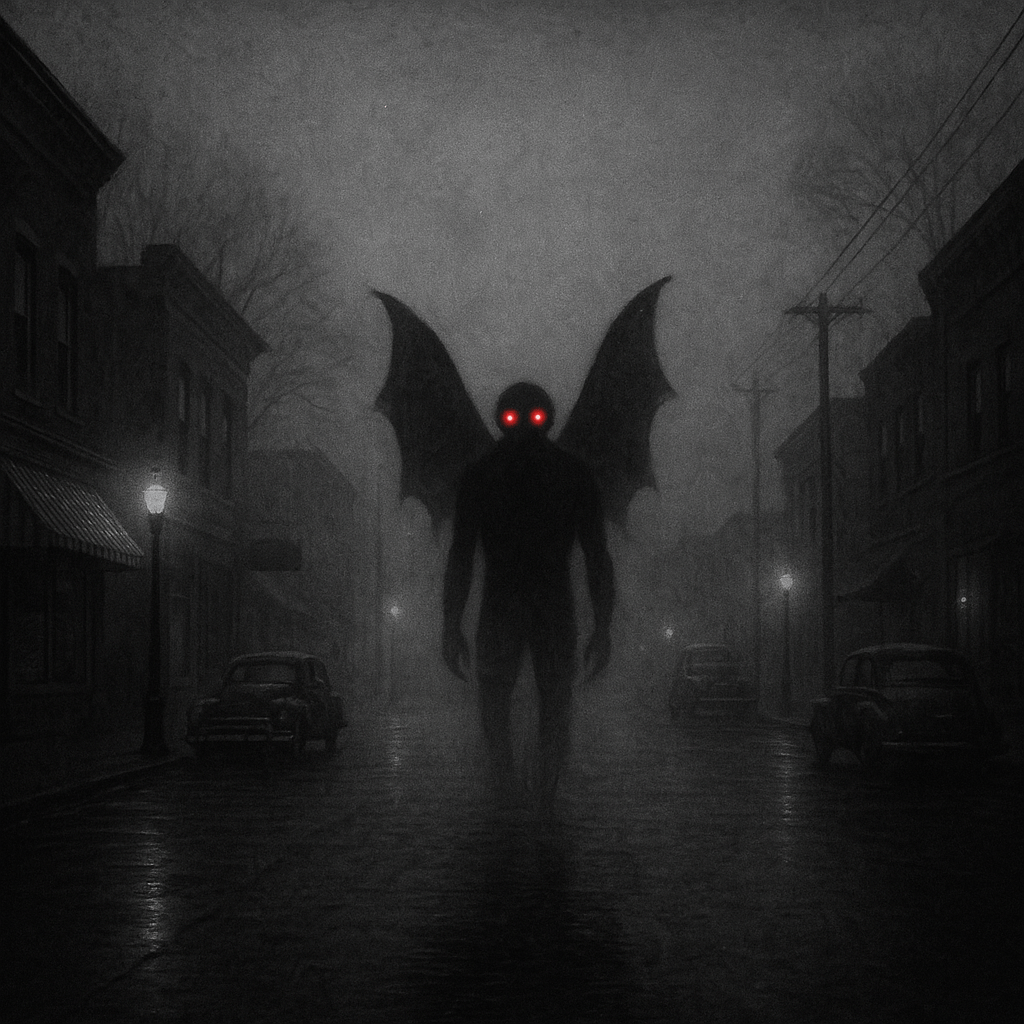
    In the quiet riverside town of Point Pleasant, West Virginia, a legend took flight—literally. Along the shadowed banks of the Ohio River, stories have echoed for decades about a creature with glowing red eyes and enormous wings, known only as the Mothman. It’s a tale that began in the 1960s and has never fully landed, continuing to haunt the imaginations of skeptics and believers alike.

    The earliest documented sighting occurred near Clendenin in November of 1966. A group of gravediggers preparing a burial reportedly looked up to see a figure emerging from the trees—man-shaped, but with wings, gliding overhead without a sound. Days later, just over 80 miles away, two young couples in Point Pleasant encountered what they believed to be the same entity. They described a towering figure, at least seven feet tall, with wings that spanned nearly ten feet. But it was the eyes—brilliant and red, almost burning—that lodged the experience deep in their memories. The creature didn’t just appear—it pursued, reportedly following their car at speeds exceeding 100 miles per hour, not flying like a bird, but gliding with unnatural ease through the air.

    These sightings weren’t isolated. Over the next year, dozens of residents claimed to witness the creature in and around Point Pleasant. Some saw it soaring over the old TNT area—a sprawling site of abandoned World War II munitions bunkers, overgrown with weeds and soaked in eerie silence. Others claimed it landed near their homes or watched from wooded hillsides. Reports varied in detail but were consistent in tone: whatever it was, it felt wrong—unnatural, out of place.

    Then, on December 15, 1967, tragedy struck. The Silver Bridge, which connected Point Pleasant to Gallipolis, Ohio, collapsed during rush hour, sending 46 people to their deaths in the icy river below. The disaster was blamed on a single faulty eyebar in the bridge’s suspension chain. But for many locals, it was more than a mechanical failure—it was a culmination. Sightings of the Mothman abruptly stopped after that day. To some, it seemed the creature had arrived as a warning, a dark herald of the catastrophe to come.

    John Keel, a journalist and paranormal investigator, cemented this idea in his book The Mothman Prophecies, suggesting that the entity may be connected to other phenomena: strange lights in the sky, men in black suits, and psychological disturbances in those who saw it. Keel didn’t claim to fully understand what Mothman was—but he was convinced that something extraordinary had occurred in Point Pleasant.

    Skeptics offer their own theories. Some believe the sightings were simply misidentifications of large birds—particularly the sandhill crane, which can stand nearly four feet tall and has a wingspan over six feet. With reddish patches around its eyes and a haunting call, it’s not an impossible candidate. Others suggest the entire wave of sightings was born from hysteria, fueled by newspaper headlines and a community ripe for supernatural storytelling.

    Still, the Mothman legend refuses to fade. In fact, it has expanded. Reports of similar winged beings have surfaced around the world—before the 1986 Chernobyl disaster, in the days leading up to the Fukushima nuclear accident, and even in parts of Chicago. These alleged sightings suggest that Mothman is not tied to Point Pleasant alone but may be part of a global pattern—an omen, a psychic echo, or an interdimensional observer that appears when catastrophe is near.

    Today, the town of Point Pleasant embraces its most famous resident. The Mothman Museum draws curious visitors from all over the world, and the annual Mothman Festival turns the streets into a celebration of mystery, folklore, and what-ifs. Statues and murals commemorate the creature, blending wonder with a wink of local pride. For many residents, the story has shifted from fear to folklore—a way to connect with the past and keep the town’s identity alive.

    Yet, even amid celebration, a shadow lingers. What if it wasn’t just a story? What if something did break through that year in 1966—something watching, warning, or simply wandering through a crack in the known world?

    The Mothman endures not just because it’s strange, but because it fits something deep within us: the sense that not everything has been explained. That sometimes, reality tilts just enough for something impossible to fly through. Whether as a creature, a sign, or a shared psychological event, the Mothman is part of a larger mystery—one that hovers at the edges of belief.

    And in Point Pleasant, that shadow still passes through the trees. Not often, and not loudly—but just enough to keep the legend alive.

  • Unlocking Hidden Dimensions: The Mind’s Dance with the Unknown

    What if the strange and unexplained isn’t merely visiting our world—but coexisting with it, layered within dimensions we simply cannot see?

    This haunting possibility lies at the heart of the theories proposed by Bernard Carr, a professor of mathematics and astronomy at Queen Mary University of London. Carr, who blends rigorous science with a curiosity for the unknown, suggests that paranormal entities may not be figments of imagination or hallucinations—but real phenomena from higher dimensions that brush against our reality. And according to him, the bridge between those dimensions and our own could be something we carry with us every day: our consciousness.

    Most of us were taught to think in terms of four dimensions: three of space, one of time. That was Einstein’s model, and for many, it still defines how we imagine the universe. But modern theoretical physics—particularly string theory—has expanded that idea, positing up to eleven dimensions curled tightly within the fabric of existence. These extra dimensions are often dismissed as inaccessible or purely mathematical. But Carr proposes something more radical: that some of these hidden realms are not only accessible, but already inhabited—by things we struggle to understand.

    And we’re not just observers in this model. We’re participants.

    Carr describes these dimensions as existing in a kind of hierarchy, like a staircase of reality. Humanity, in his view, is just now standing on the bottom step, peering upward. What lies above may contain what we have long called ghosts, spirits, angels, or shadow beings. And it’s not that these beings travel from “there” to “here”—they’ve been here all along, moving in their own dimensional space, overlapping ours in strange and inconsistent ways.

    In one of his more provocative conference presentations, Carr suggested that the key to understanding paranormal phenomena may lie not in the physical evidence, but in the relationship between mind and matter. For centuries, philosophers have debated the nature of reality. Are thoughts just internal reflections, or do they connect to something greater? Carr proposes a third option—that consciousness itself may be a dimensional structure, capable of interacting with non-material realms.

    This isn’t the airy speculation of science fiction. Carr’s background is grounded in serious astrophysics; he worked alongside Stephen Hawking and has written extensively on black holes and cosmology. Yet he openly critiques mainstream science for its reluctance to tackle consciousness as a legitimate part of the physical universe. He believes that psychic phenomena—such as telepathy, remote viewing, or even out-of-body experiences—may not be paranormal at all. Instead, they might be extra-normal: ordinary events occurring across dimensions we haven’t yet learned to measure.

    Think of a dream that feels too vivid. A presence you sense but cannot explain. An encounter that leaves you chilled to the bone, though there’s no one in the room. These experiences have often been dismissed as tricks of the mind. But what if the mind is the only organ capable of sensing what exists just beyond the veil?

    This theory challenges the foundations of physics, psychology, and philosophy all at once. If Carr is correct, we’ve been trying to build a Theory of Everything while ignoring one of the biggest pieces of the puzzle. How can we explain the universe if we leave out the only thing capable of perceiving it?

    It’s no coincidence that stories of strange encounters often happen when people are in altered states—sleeping, meditating, near death, or emotionally heightened. Carr’s ideas suggest that these states might temporarily shift our consciousness into alignment with higher dimensions, like tuning a radio slightly off the standard frequency and catching an eerie voice from another station.

    And so, we are left with questions that seem both ancient and brand new: Is consciousness a cosmic antenna? Are paranormal events echoes of another reality bleeding into ours? Could our dreams be brief visits to a world just a breath away?

    The science isn’t settled—but maybe that’s the point. Carr’s perspective opens the door to a kind of scientific mysticism, where mind and matter, spirit and space, can all be part of the same vast and strange system. A system we’re only beginning to glimpse.

    We may not have the instruments to map these dimensions yet. But as our understanding of consciousness grows, we might find that the things we once called ghosts, or visions, or otherworldly beings, are not so far away. Perhaps they are neighbors—just one floor up on that cosmic staircase.

    And if that’s true, what else might be watching, waiting, or simply living alongside us… unseen?

  • What Lurks in California: Unraveling the State’s Eeriest Creatures

    In our vast and diverse state of California, mysterious creatures stir not only in the shadowed depths of ancient forests but sometimes along the fringes of our everyday lives—in canyons, deserts, and even suburban streets. The Golden State isn’t just rich in gold and sun—it’s saturated with stories. Some passed down through generations of Indigenous people, others whispered late at night over campfires, and a few caught on shaky video that seems too strange to fake. Have you ever wondered what’s out there, just beyond the reach of our headlights—or our understanding?

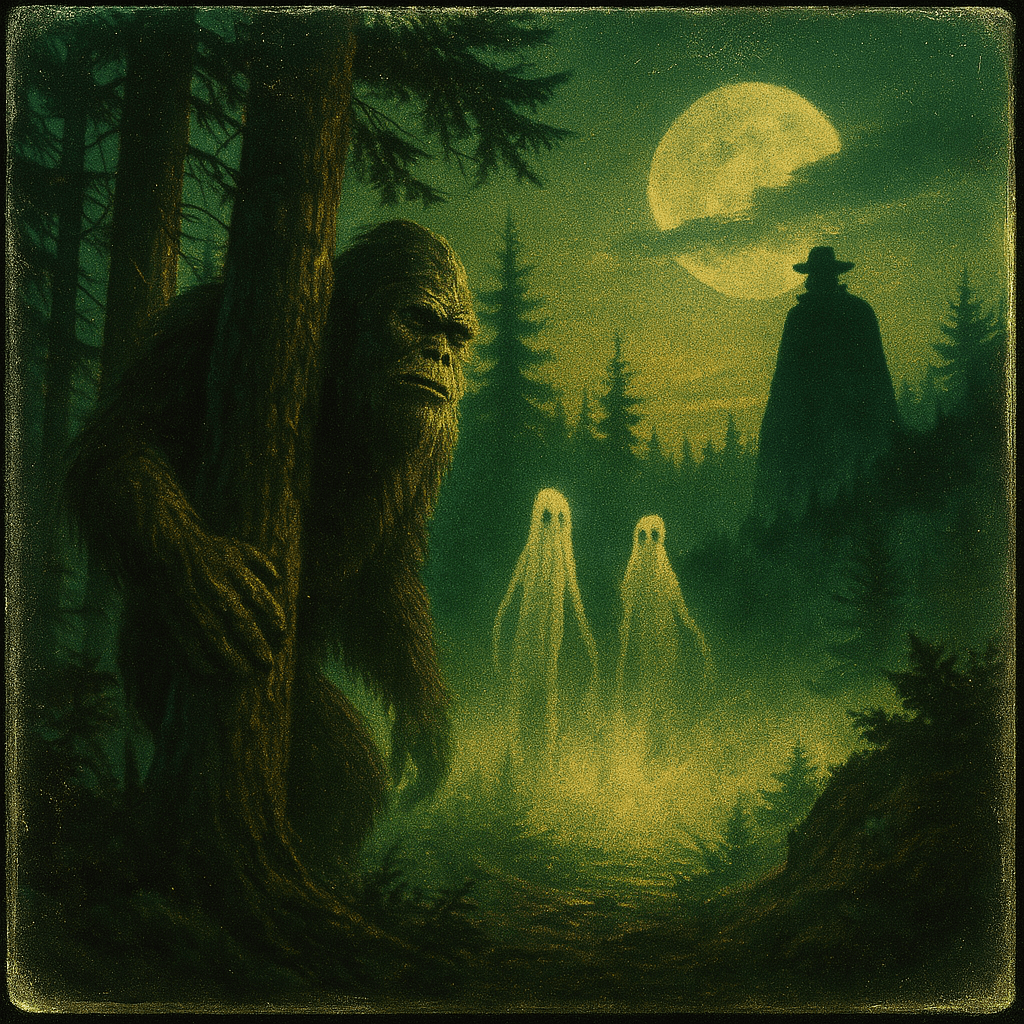
    The most famous of California’s elusive beings is, of course, Bigfoot. Towering, shaggy, and strangely silent, this creature has been spotted from the misty woods of the Pacific Northwest down to the redwood forests of Northern California. But it was the 1967 Patterson-Gimlin film, captured in the dense woodlands of Willow Creek, that cemented Bigfoot in popular consciousness. In it, a hulking figure strides confidently across a clearing, glancing briefly over its shoulder as if annoyed to be seen. Was it a person in a costume? Or something much older, much wilder—an echo of our primal past walking in modern times? Eyewitnesses continue to report encounters, often describing the same details: the smell, the silence before it appears, the feeling of being watched. Hoax or harbinger, Bigfoot has become a symbol of the unseen watching just beyond the trees.

    But Bigfoot isn’t California’s only cryptid. In the quiet city of Fresno, a security camera in 2007 captured something that seemed… not of this world. Known now as the Fresno Nightcrawlers, these creatures appear as little more than long, white legs—no arms, no torso, no discernible head. They drift across the screen like pants blown by a ghostly breeze. While some write them off as puppetry or digital trickery, others feel their eeriness is too authentic, too deliberate. In fact, similar beings have been spotted again—this time in Yosemite National Park, one of the most energetically charged natural spaces in the country. Are these Nightcrawlers alien scouts? Nature spirits? Beings from a dimension we’ve only begun to glimpse? Their form defies biology, and their movement challenges gravity itself.

    Further down the coast, in the Santa Lucia Mountains, a much older legend watches from the ridges. They’re called the Dark Watchers—tall, humanoid silhouettes that appear at twilight and silently observe hikers from afar. Spanish settlers wrote about them in the 1700s. John Steinbeck even mentioned them. Described as wearing cloaks and standing perfectly still, they never approach, speak, or chase. They only watch. Indigenous Chumash stories speak of “the old ones” who dwell in the mountains, warning of spirits who guard sacred ground. Perhaps the Watchers are echoes of these protectors—or perhaps they are something else entirely. No one has ever seen them up close and lived to tell the tale in detail.

    To the east, in the clear, cold waters of Lake Tahoe, something stirs beneath the surface. Tahoe Tessie is said to be a massive, serpent-like creature that has been seen by both locals and tourists since the 1800s. Descriptions vary—sometimes she’s sleek and smooth like a sea serpent, other times more jagged and prehistoric, like a plesiosaur that defied extinction. Scientists have dismissed the sightings as misidentified sturgeon or underwater waves. But the sightings persist. Could Tessie be hiding in the deep underwater tunnels rumored to connect Lake Tahoe with Pyramid Lake in Nevada—tunnels so cold, so black, they’ve never been fully explored?

    In Southern California, the mysteries take a different turn. In 1958, Charles Wetzel was driving near Riverside when something lunged into the road. He described a grotesque figure, taller than a man, with rough scaly skin, bulging eyes, and a mouth that stretched too wide. Its shriek echoed through his car as he sped away in terror. The encounter was dubbed the Riverside Monster, and while sightings are rare, the story endures. Was it a deformed animal? An alien displaced from its ship? Or some desert spirit pulled into this world through a crack in reality?

    And then, high in the Sierra Nevada mountains, there’s a creature more sinister than most: the Lone Pine Mountain Devil. Said to resemble a bat the size of a dog, with wings like torn leather and teeth too many to count, this creature allegedly slaughtered entire groups of Spanish missionaries in the 1800s—leaving only bones behind. Witnesses today claim to hear strange screeches in the wind or see shapes flitting between pine trees. Could the Mountain Devil be nature’s revenge? A Western cousin of the Jersey Devil? Or perhaps a cautionary tale made flesh, warning those who trespass too boldly into ancient lands?

    California is often thought of as sunshine and surf, but it holds a darker side—one filled with unexplainable sights and stories that refuse to fade. From coast to desert, mountain to sea, these cryptids represent more than just fear—they speak to curiosity, to wonder, and to the persistent truth that not everything has been discovered.

    Are these creatures mere myth, built from misidentifications and folklore? Or are they glimpses of something real—fragments of a hidden world brushing up against our own? In California, where the earth trembles and the fog rolls in thick, anything seems possible. So next time you hike a trail, walk alone at night, or glance out across the water… keep your eyes open.

    Because in California, something might be watching.

  • 1974’s Paranormal Panic: The Culver City Case

    Half a century ago, something strange stirred in a quiet home in Culver City. And what followed would haunt not just the house—but the very halls of UCLA. In the 1970s, universities across America flirted with fringe science. But at UCLA, one lab went further than most. Tucked away on the fifth floor of the Neuropsychiatric Institute was a modest parapsychology unit, led by Thelma Moss—a psychologist, former actress, and early advocate for psychedelic research. Between 1966 and 1978, this shadowy lab became a hub for those brave enough to study the unexplained. Moss attracted not only students but Hollywood stars and even covert visitors from the intelligence community. There were whispers of experiments designed to weaponize the mind, of consciousness projected across distances, and of the dead speaking through static and film grain. Among Moss’s closest collaborators were Barry Taff and Kerry Gaynor—two researchers whose lives would be forever altered by what came next.

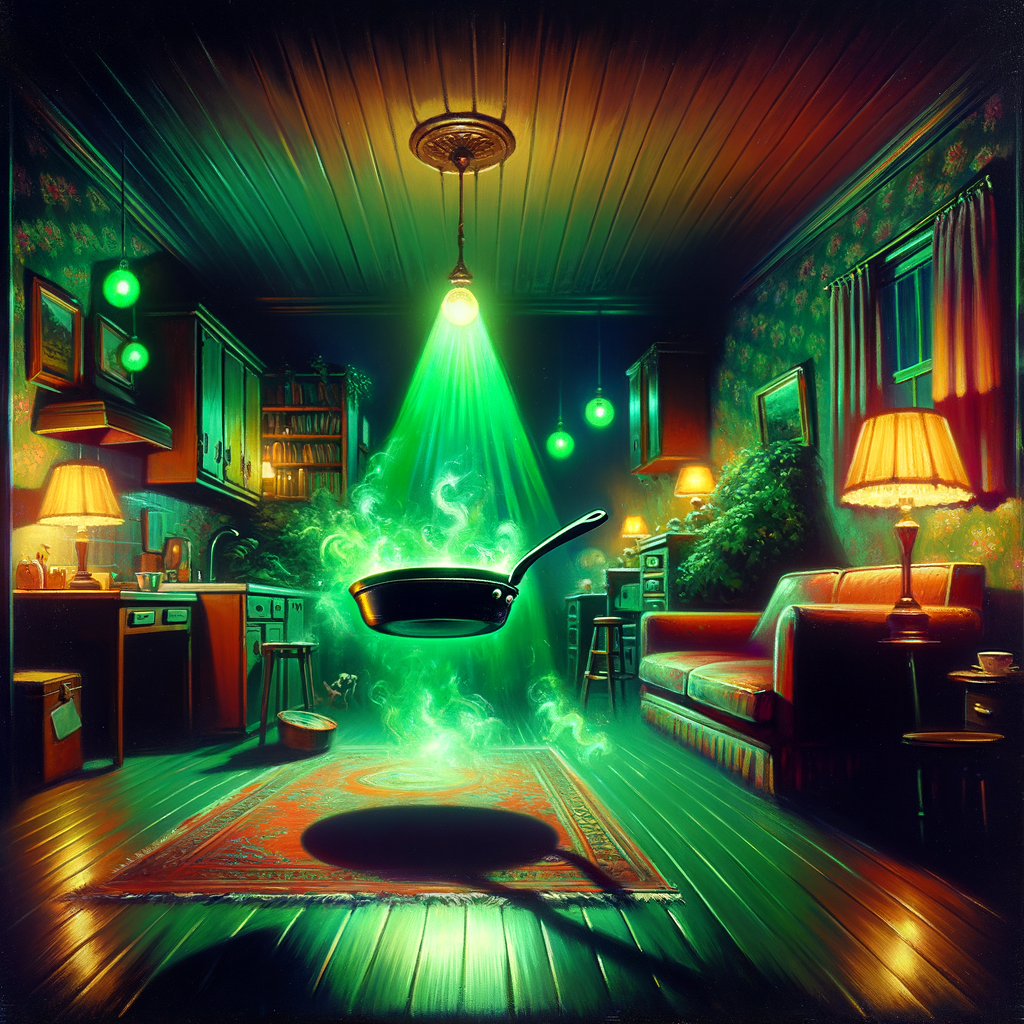
    The story begins with a chance encounter. In the summer of 1974, Taff and Gaynor met a woman named Doris Bither at a bookstore in Los Angeles. She was anxious, guarded, and claimed to be under attack—by forces she couldn’t name. Her Culver City home, she said, was alive with hostile, invisible entities. Skeptical but intrigued, the two investigators agreed to visit. What they encountered was more than just creaky floorboards or a distressed homeowner. Doris’s house felt wrong. A tension hung in the air. And when a frying pan launched itself across the kitchen unprovoked, they knew they had stepped into something much bigger than a simple haunting.

    For ten weeks, the house became a focal point of intensive observation. Taff and Gaynor documented cold spots, luminous orbs, disembodied voices, and, most famously, an eerie green mist that seemed to float through the air. Attempts to photograph or record the events often failed. Batteries drained. Equipment malfunctioned. And always—just before the activity peaked. The phenomenon seemed to center not on the house, but on Doris herself. When her teenage son played music, the activity intensified. Objects flew. Lights flickered. Shadows danced across the ceiling. The researchers noted that the house didn’t seem haunted—Doris did. Some began to wonder if she was a psychic catalyst, generating these events unknowingly. Others speculated about darker possibilities: trauma, poltergeist manifestations born from stress, or even interdimensional disturbances drawn to human energy.

    Despite their efforts, Taff and Gaynor were unable to collect hard evidence. Photographs came out blurred or empty. Instruments captured anomalies, but never consistently. Skeptics dismissed the case as hysteria or confirmation bias. Still, those who were there speak of the events with a haunted certainty. Was Doris a victim of a classic poltergeist case—where unconscious psychic energy manifests physical disturbances? Or was something more ancient and malevolent at play? Some have compared the case to historical “entity attacks” described in folklore, where a person becomes a lightning rod for dark spirits. The truth remains frustratingly out of reach.

    Doris herself remained a cipher. She resisted deep questioning, offered little about her past, and was rarely seen outside the investigations. What little is known paints a picture of a woman battling invisible enemies—both in the walls of her home and, perhaps, within herself. She died in 1999, never fully understood. Some believe she suffered from undiagnosed mental illness. Others argue she was highly sensitive—psychically open to realms most of us will never perceive. The case inspired the 1982 film The Entity, though the real story remains far stranger than fiction.

    By 1978, the parapsychology lab at UCLA was shuttered. Officially, it was due to funding issues and a shifting academic climate. Unofficially, some believe the university grew uncomfortable with what the lab was discovering—or failing to explain. Taff and Gaynor continued their work independently, but nothing they encountered again ever matched the volatility of the Doris Bither case. Even today, Taff insists that what he witnessed in Culver City defies rational explanation.

    Why did the phenomena intensify around Doris? Was she truly the source—or just a conduit? Could intense emotional trauma manifest as physical events? And why did so many of the recordings and photographs fail—almost as if whatever was there didn’t want to be seen? Fifty years later, no one has solid answers. Just fragments. Just shadows. But sometimes, that’s all a mystery needs to survive.

    Have you ever felt watched in an empty room? Heard a sound you couldn’t explain? Perhaps the walls remember more than we do.